


Paxos and Antipaxos
Paxos and Antipaxos are two of the minor islands of the Ionian Islands, particularly known for their natural beauty and majestic beaches. The islands are located south of Corfu and represent one of the best destinations for those who wish to enjoy the picturesque beaches, far away from the bustling areas of the tourist resorts.
Paxos hosts around 2,500 permanent residents and is known for its rocky shores, often featuring fine white pebbles and azure waters. The history of Paxos and Antipaxos is rich, dating back to ancient times, while being closely tied to Greek mythology. According to legend, the islands were created when Poseidon struck Corfu with his trident, breaking off its southern tip to create a place where he could live out his love for Amphitrite. The islands flourished and served as a significant point of development throughout antiquity until the Roman era, when Paxos became a harbor for the empire.
Tranquil Settlements, Enchanting Beaches, Sea Caves, and Nature Escapes in the Heart of the Ionian Islands
The name “Paxos,” according to the ancient geographer Strabo, comes from the Greek word “pax”, describing the island’s trapezoid shape as seen from the sea. Others attribute the name to the combination of the words pax (meaning slab or plate) and the ending ae or ai (meaning island), translating to “island of slabs.” A less common theory suggests that the name derives from the phrase “paxosas thyras” (meaning closed doors), as Gaios’ harbor is enclosed and protected from rough seas and weather. Whatever the true origin, the richness of the Greek language has generated stories that give the islands a unique and distinct character.
Tourism development, which made Paxos well-known throughout Greece and beyond, began in the late 1960s. Previously, residents were primarily engaged in fishing, olive oil production, and winemaking. Both islands were particularly renowned for their olive groves, most of which were planted during the Venetian era when there was even a soap factory in the area of Loggos.
Paxos hosts two main settlements: Gaios and Lakka. Gaios is the largest of the two, with around 700 permanent residents. The beauty of the settlement’s harbor is particularly striking, as it is naturally protected by the two small islands of Panagia and Agios Nikolaos, creating a unique setting. In Gaios, one can observe various Venetian influences in the architecture of the buildings. The town is adorned with impressive old mansions and narrow, picturesque alleyways that traverse the town from end to end. Within the settlement, there are four churches: the Church of the Ascension, the Church of the Holy Apostles, the Church of the Holy Trinity, and the Church of the Agioi Anargiroi. Notably, it is said that beneath the Holy Altar of the Church of the Holy Apostles lies the tomb of Saint Gaius, a disciple of Saint Paul of Corinth, after whom the settlement is named. In Gaios, you will also find the impressive Paxos Museum, which has been operating since 1996 in a neoclassical building dating back to 1905, inviting all visitors to discover the island’s history and secrets.
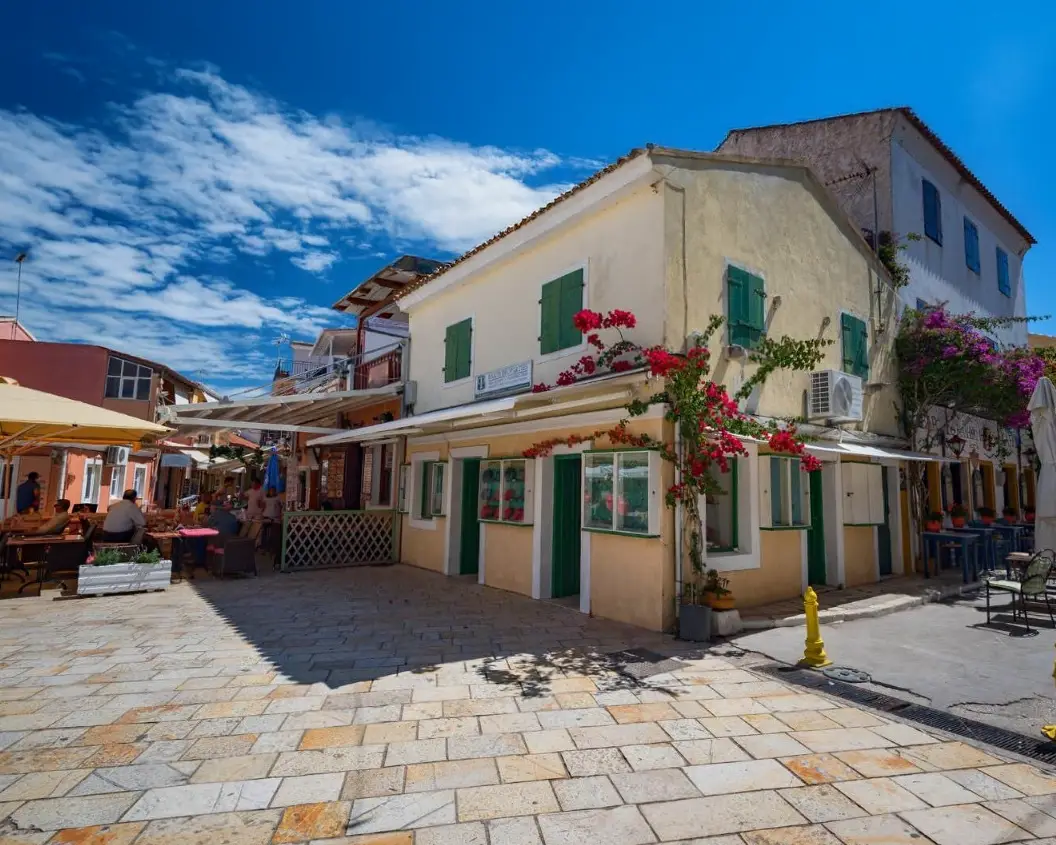
Gaios is a tranquil settlement that allows visitors to enjoy their holidays away from the excessive noise and commotion of tourist resorts. Traditional shops, restaurants, and tavernas offer local culinary delights, while entertainment venues provide hours of fun and amusement during the summer evenings.
The village of Lakka, located in the northern part of the island, lies approximately 8 kilometers from Gaios. It is home to around 160 residents and is a small, picturesque settlement, fully modernized to meet all tourist needs. In Lakka, you will find the beautiful Church of the Ipapanti, built around 1774, featuring Renaissance elements in its decoration, as well as a unique stone lighthouse just outside the village, constructed in 1932, overseeing the entire bay and the Ionian Sea. Lakka is often chosen by those who appreciate tranquility and relaxation, making it ideal for families seeking summer vacations without excessive tourism.
The most famous beaches of Paxos stand out for their unique beauty and enchanting turquoise waters. Perhaps the most renowned beach on the island is Erimitis, which was formed in 2008 after a significant landslide. It is characterized by its white pebbles and the imposing cliffs that surround it. Similarly, there is Blue Beach, located on the eastern side, which is accessible only by boat. This idyllic shoreline gives the impression of complete solitude and tranquility that many seek. Quite different is the beach of Orkos, which offers easy access, white pebbles, and trees that almost touch the turquoise waters.
As for Antipaxos, this small island has a sparse population and is ideal for alternative tourism. Its secluded beaches and unique natural landscapes set it apart, making the island a distinctive choice in the Ionian Sea. The most famous beach in Antipaxos, and one of the most popular in all of Europe, is Voutoumi. The lush scenery surrounding the beach feels tropical, while the almost transparent waters and pristine white sand evoke images of exotic and unspoiled places. Nearby is Vrika Beach, another beautiful shoreline featuring stunning waters and rich vegetation. Close to the waves, there is a beach bar and taverna that provide visitors with all the essentials.
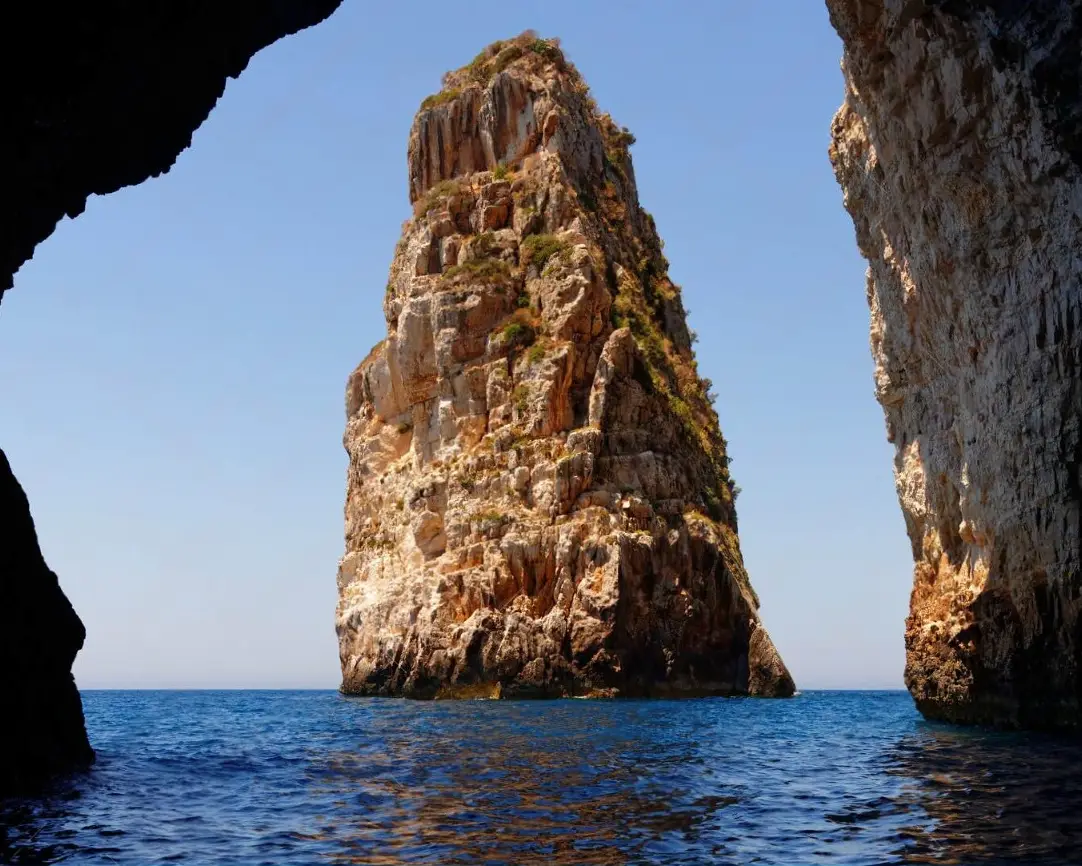
Paxos boasts a rich and intricate coastline, perfect for exploring by boat. A tour around the island will allow you to discover beautiful caves with enchanting colors and breathtaking stories. The Cave of Ypapanti, the Blue Caves, and the Papanikolis Cave are among the most stunning and famous that you shouldn’t miss visiting.
Both Paxos and Antipaxos are two enchanting islands, ideal for hiking and activities that bring you closer to nature. Drenched in lush greenery and surrounded by the waters of the Ionian Sea, the islands of Poseidon invite you to explore and uncover all their secrets.